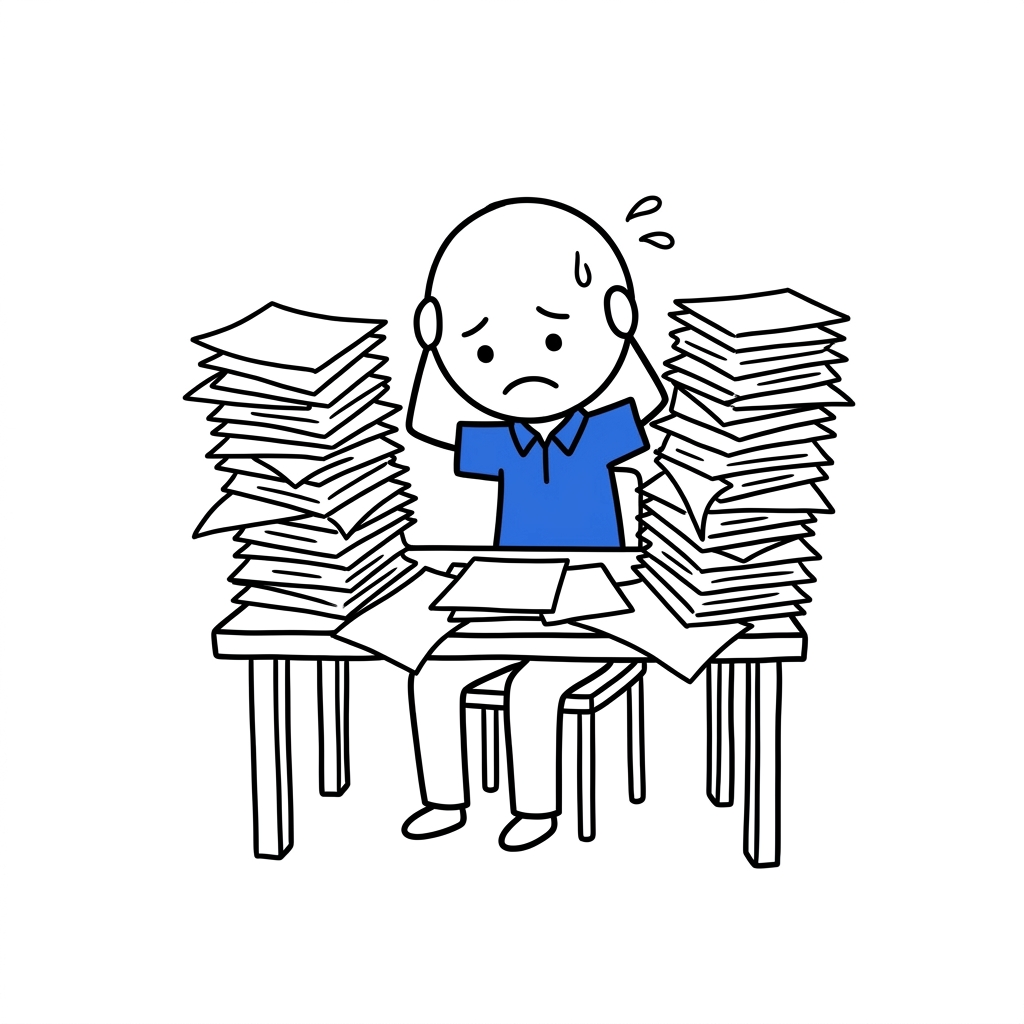
An MIT and Boston University study projects that AI will replace as many as two million manufacturing workers by 2026. Before factory floor workers start worrying, though, they should look at who is most at risk.
By the end of 2026, 20% of organisations will use AI to flatten their hierarchy, cutting over 50% of current middle management positions. Broken down by seniority, middle management faces the highest risk at 46%.
The people AI is coming for are the ones who manage the machinist's schedule, compile the weekly report and consolidate the delivery data.
Why middle management is vulnerable
Middle managers in manufacturing spend most of their time on three activities. They collect information from different sources. They format it into reports or presentations. They pass it up to senior leadership with recommendations. AI now handles all three faster and more consistently.
The counterargument: AI creates jobs too
The numbers aren't entirely grim. AI will displace an estimated two million manufacturing jobs by 2026. But the World Economic Forum projects 170 million new jobs created globally by 2030, a net gain of 78 million positions. In manufacturing specifically, 2.1 million positions are already unfilled because there aren't enough workers.
AI eliminates tasks more than jobs. People who defined their role by those tasks are the ones at risk. The BD manager who spends all week making PowerPoint slides is vulnerable. The BD manager who uses AI to make slides in 10 minutes, then spends the rest of the week building customer relationships, is not.
What manufacturing professionals should do
Don't compete with AI at tasks it does better. Compete at what it cannot do: reading your customer's unspoken concerns, making judgment calls about which data matters, spotting that a delivery problem is really a scheduling problem in disguise, reading the room in a negotiation.
The professionals who survive this transition use AI to cut the low-value work, then spend more time on the high-value work only humans can do. Put the time you get back into different, higher-value work instead of doing the same work faster.